Knee pain in young people is a common concern, especially among active adolescents. One of the most common causes is a condition known as Osgood Schlatter Disease (OSD). Although it often improves with time, the pain can persist for months and may affect sports, school activities, and everyday movement. At Vale Health Clinic, we offer an advanced and effective treatment option using shockwave therapy, tailored to support long-term recovery in a safe and professional environment.
Osgood Schlatter Disease
Osgood Schlatter Disease is an overuse condition that affects the growing area just below the knee. This area, known as the tibial tuberosity, is where the patellar tendon attaches to the shin bone. During periods of growth, this area becomes more vulnerable to irritation caused by physical activity.
Young people experiencing OSD often report a painful lump below the kneecap that worsens with movement such as running, jumping or kneeling. Symptoms can affect one or both knees and usually ease during rest. Although the condition is not harmful in the long term, the pain can be frustrating and may affect participation in sports or active hobbies.
Who Is Affected by OSD
Osgood Schlatter is most common during puberty, particularly in boys aged 10 to 15, although girls can also be affected. It tends to occur during rapid growth when bones, muscles and tendons are adjusting at different rates. Young athletes involved in football, rugby, running, gymnastics or dance are more likely to develop symptoms, especially if activity levels remain high without sufficient recovery.
Typical Symptoms of OSD
The key features of Osgood Schlatter Disease include:
- Pain or tenderness just below the kneecap
- Swelling or a raised bump at the top of the shin
- Stiffness or discomfort during squatting, jumping or climbing stairs
- Relief with rest and return of pain during or after activity
If the pain persists or begins to limit movement, it may be time to consider a treatment plan that supports healing and protects long-term joint function.
Shockwave Therapy for Osgood Schlatter
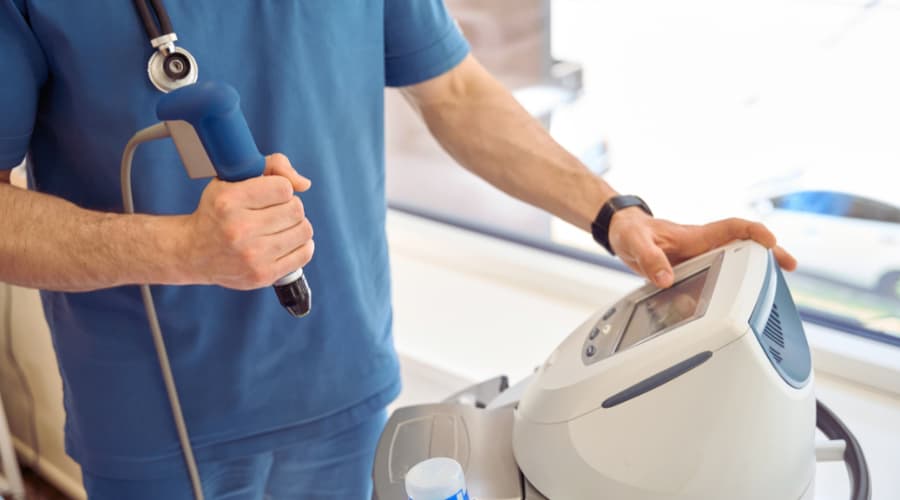
At Vale Health Clinic, we use extracorporeal shockwave therapy (ESWT) as part of a modern approach to managing tendon and growth-related knee pain. Shockwave therapy is a non-invasive treatment that delivers acoustic pressure waves to the affected area using a handheld device.
These waves stimulate the body’s natural repair processes by encouraging:
- Improved blood flow to the tendon and surrounding tissue
- Reduced inflammation and sensitivity
- Collagen regeneration to strengthen the tendon structure
- Breakdown of dysfunctional tissue and release of tension
This therapy is beneficial in cases where OSD pain has lasted more than a few weeks or where activity modification has not led to improvement.
The Treatment Process
Shockwave sessions are straightforward and well-tolerated. The treatment area is identified during your assessment, and a small amount of gel is applied to the skin to ensure good contact. A handheld device then delivers a series of sound waves to the affected site. Most sessions take around 15 to 20 minutes and do not require medication or recovery time.
Patients may feel a light tapping sensation during treatment. This is not usually painful and can be adjusted to suit individual comfort levels. As the healing response builds over time, the benefits often continue to increase for several weeks after treatment has ended.
Recovery and Results
Many young people begin to notice a gradual improvement in pain and function within a few sessions. While some relief can be felt relatively quickly, the best results typically emerge over a six- to eight-week period, as the tendon structure improves and the surrounding tissue becomes more stable.
Most treatment plans involve three to six sessions, spaced a week apart. After the course is complete, the knee may continue to settle and strengthen for several months, particularly with supportive exercises or temporary adjustments to activity levels.
Supporting Treatment at Home
Alongside clinical treatment, we recommend a few simple strategies to support recovery:
- Resting from high-impact sports or repetitive movements for a short time
- Using a cold compress to reduce swelling if recommended by your practitioner
- Wearing supportive footwear to reduce strain on the knee
- Following any guided stretching or strengthening exercises
Your chiropractor or clinician will advise on the most suitable approach based on your activity levels, age, and condition stage.
A Safe and Effective Option for Young People
Shockwave therapy is both safe and effective in younger patients when used in the proper clinical setting. It avoids the need for injections or medication and carries none of the risks associated with surgical procedures. The treatment is carried out by experienced practitioners using modern equipment and is well-suited to adolescents experiencing persistent knee pain due to OSD.
Before treatment begins, a comprehensive assessment will be conducted to confirm the diagnosis and determine whether shockwave therapy is the most suitable option. In some cases, other approaches, such as chiropractic care or targeted rehabilitation, may also be recommended as part of a comprehensive plan.
Chiropractic Support and Rehabilitation
Osgood Schlatter is not just a localised knee problem. It often develops alongside muscular tightness, postural changes or altered movement patterns during growth. Chiropractic care can help address these contributing factors, improve biomechanics and prevent the condition from lingering or recurring.
At Vale Health Clinic, we may combine shockwave therapy with tailored chiropractic treatments and supervised exercises to provide a holistic approach that addresses both symptoms and the underlying cause.
Vale Health Clinic
Based in Tunbridge Wells, our clinic offers a welcoming and professional environment for children, teenagers and families seeking effective musculoskeletal care. We use evidence-based therapies, including radial and focused shockwave, alongside chiropractic and rehabilitation support to deliver personalised treatment plans.
Our clinicians are experienced in working with young people and take the time to listen, assess and guide every step of the way. Whether your child is an athlete, a casual participant, or simply struggling with everyday movement, we are here to help them recover safely and confidently.
Looking Ahead to Recovery
Osgood Schlatter Disease can be frustrating, but it does not need to limit activity or cause long-term problems. With the proper care, most young people make a full recovery and return to their usual activities without restriction.
If your child is experiencing persistent knee pain or discomfort below the kneecap, early intervention can make a real difference. Shockwave therapy, combined with supportive care and movement advice, offers a proven route to relief and recovery.
Related Articles
- Kick Away Typical Football Injuries
- Shockwave Therapy For Heel Pain
- Shockwave Therapy For Running Injuries
- Knee Exercises for Pain and Rehabilitation
- How Does Shockwave Therapy Work on Tendons
Prefer an AI Summary?