
Calf Ultrasound Scan in Tunbridge Wells
Get Clear Answers for Calf Pain, Swelling & Injury
Calf pain or swelling can affect your ability to walk, exercise, or even stand comfortably. Whether caused by a strain, tear, or underlying condition, a calf ultrasound scan helps identify the issue quickly and accurately.
Using advanced ultrasound technology, we assess the soft tissues in your calf in real time — giving you fast answers and peace of mind.
AT A GLANCE
Fast, Accurate Diagnosis
Quickly identify the cause of calf pain or swelling with clear imaging.
Safe, Pain-Free & Non-Invasive
No radiation, no injections, and no downtime.
Detailed Soft Tissue Assessment
We examine muscles, tendons, and surrounding structures.
Immediate Answers & Reassurance
Results are explained on the same day.
WHAT IS A CALF ULTRASOUND SCAN?
A calf ultrasound scan uses sound waves to create detailed images of the muscles, tendons, and soft tissues in the lower leg.
It is commonly used to assess:
- Muscle strains or tears (e.g. gastrocnemius or soleus injuries)
- Tendon injuries
- Swelling or inflammation
- Fluid collections or cysts
- Possible blood clots (DVT assessment when appropriate)
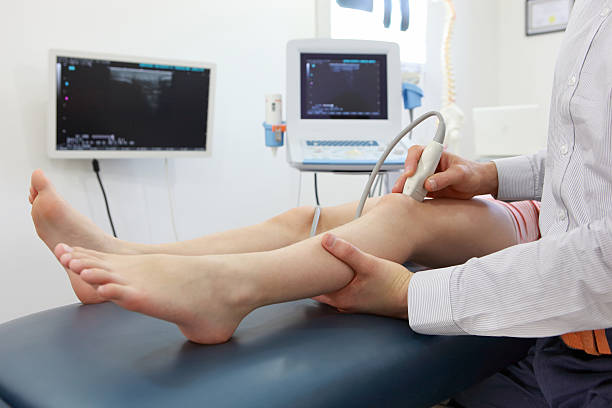
Ultrasound provides real-time imaging, allowing us to assess movement and pinpoint the exact source of discomfort.
📍 Available at our Tunbridge Wells clinic, serving patients across Kent.
Comprehensive Health Assessment
Vale Health Clinic Tunbridge wells
WHAT DOES A CALF ULTRASOUND SCAN ASSESS?
Your scan provides a detailed evaluation of:
- Gastrocnemius muscle – common site for strains and tears
- Soleus muscle – deeper muscle injuries
- Achilles tendon (lower calf region) – inflammation or damage
- Soft tissue structures – swelling or abnormalities
- Fluid collections – signs of injury or inflammation
- Blood flow (if required) – to assess for possible clot-related concerns
This helps identify the exact cause of your symptoms and guide the right treatment plan.
1. Understand the cause of your calf pain quickly
Calf pain can result from muscle injury, inflammation, or more serious issues. A scan provides clear answers without delay.
2. Quick and convenient access to diagnosis
Skip long waiting lists — book directly and get results in one visit at our Tunbridge Wells clinic.
3. Early diagnosis prevents complications
Conditions like muscle tears or suspected DVT need prompt attention. Early detection helps avoid worsening symptoms.
4. Get back to movement and activity faster
Calf injuries can limit walking and exercise. A scan helps guide recovery so you can return to normal activity sooner.
How does shockwave therapy work
Shockwave therapy, known for its ‘mechanism of action’, involves the use of a specialized device to deliver acoustic energy through the skin to the injured part of the body. The shockwaves, which are mechanical and not electric, consist of audible, low-energy sound waves that increase blood flow to the injured area.
This therapy operates through two primary modes of action to alleviate persistent tendon pain. Firstly, the shockwaves work to desensitize nerve endings, often resulting in an immediate reduction in pain. Secondly, and perhaps most importantly, the shockwaves induce controlled micro-trauma (microscopic damage) to the tissues. This action encourages the body to respond by enhancing blood circulation and metabolism in the affected area, thereby activating and accelerating the body’s natural healing response. Additionally, shockwaves can assist in ‘breaking down’ disorganised tissue and calcifications. For treatment to be optimal we would normally recommend combining this treatment with injection therapy and a rehabilitation programme.
Are there any side effects associated with Ostenil Plus?
What Are the Advantages of Ostenil for Sports Enthusiasts and Athletes?
Ostenil injections have become increasingly popular among athletes, particularly football players, who seek relief from joint discomfort resulting from intense physical exertion.
Featuring hyaluronic acid as its primary ingredient, these injections offer enhanced joint lubrication and cushioning, thereby reducing friction, easing pain, and improving mobility to enhance performance on the field.
The non-invasive nature and minimal side effects of Ostenil make it an appealing option for athletes aiming to preserve joint health and quickly return to their training and competitive activities.
Implementing injury prevention measures such as warm-up routines, conditioning exercises, and recovery strategies further bolster joint health and overall athletic prowess.
How is Ostenil produced
Ostenil is commonly manufactured through a method referred to as bacterial fermentation.
In this process, specific bacterial strains, typically Streptococcus zooepidemicus, are chosen for their capacity to generate hyaluronic acid. These bacteria are cultivated in a suitable growth medium that contains carbohydrates like glucose or corn syrup, serving as a carbon source. Through fermentation, the bacteria produce hyaluronic acid as a byproduct of their metabolic processes.
The resulting sodium hyaluronate can then be utilized in orthopedic applications, such as treating conditions like Osteoarthritis, Knee Meniscus issues, as well as Shoulder or Hip Labral tears.
Calf Ultrasound Scan — £160
Your scan includes:
- Full diagnostic assessment
- Immediate verbal results
- Detailed written report within 24 hours
Everything you need — in one appointment.
WHAT TO EXPECT
Your calf ultrasound scan is simple, quick, and completely stress-free. When you arrive, a specialist will discuss your symptoms and examine the affected area. A small handheld probe is gently moved over your calf, producing real-time images on screen.
The scan is comfortable and non-invasive, with no preparation required, no injections, and no discomfort. It typically takes around 15–20 minutes, and your results will be clearly explained during your visit.
You’ll leave your appointment with a clear understanding of your condition and the next steps.
Do I need a GP referral for a calf ultrasound?
No, you can book directly with our Tunbridge Wells clinic without needing a referral.
How long does a calf ultrasound take?
The scan usually takes around 15–20 minutes, with results explained during the same appointment.
What conditions can a calf ultrasound detect?
It can identify muscle tears, tendon injuries, inflammation, fluid build-up, and in some cases assess for suspected blood clots.
Is a calf ultrasound safe?
Yes, it is completely safe, non-invasive, and does not involve radiation or injections.
Health Assessments
YOUR SIMPLE 3 STEP JOURNEY
Step 1. Book Your Appointment
Choose a convenient time at our Tunbridge Wells clinic — no referral needed.
STEP 2.Attend Your Scan
Your scan is quick, comfortable, and performed by an experienced specialist.
STEP 3.Get Your Results
We explain everything clearly on the day, with a full written report within 24 hours.
MEET YOUR SONOGRAPHER
Naomi Lafitte
HCPC Registered Paramedic & Nutrition Coach
Naomi Lafitte is a specialist paramedic with 15 years of experience working in various settings including frontline ambulance services, primary care and education. She is registered with the HCPC and is a member of the Royal College of Paramedics.
In addition to her clinical work, she is Programme Director of the PGCert in Clinical Practice at City St George’s University of London.
Naomi is also a qualified transformational nutrition coach with interests in both urgent and emergency healthcare and lifestyle medicine. In her spare time, she can usually be found reading a book or spending time outside often with a good cup of coffee in her hand.
Book Your Consultation
To book your free consultation, please complete the form below. Naomi will contact you to discuss your specific needs and schedule your appointment.